Tourism & Activities, Tourisme Abruzzes

The provinces of Abruzzo: a fascinating journey through authentic Italy

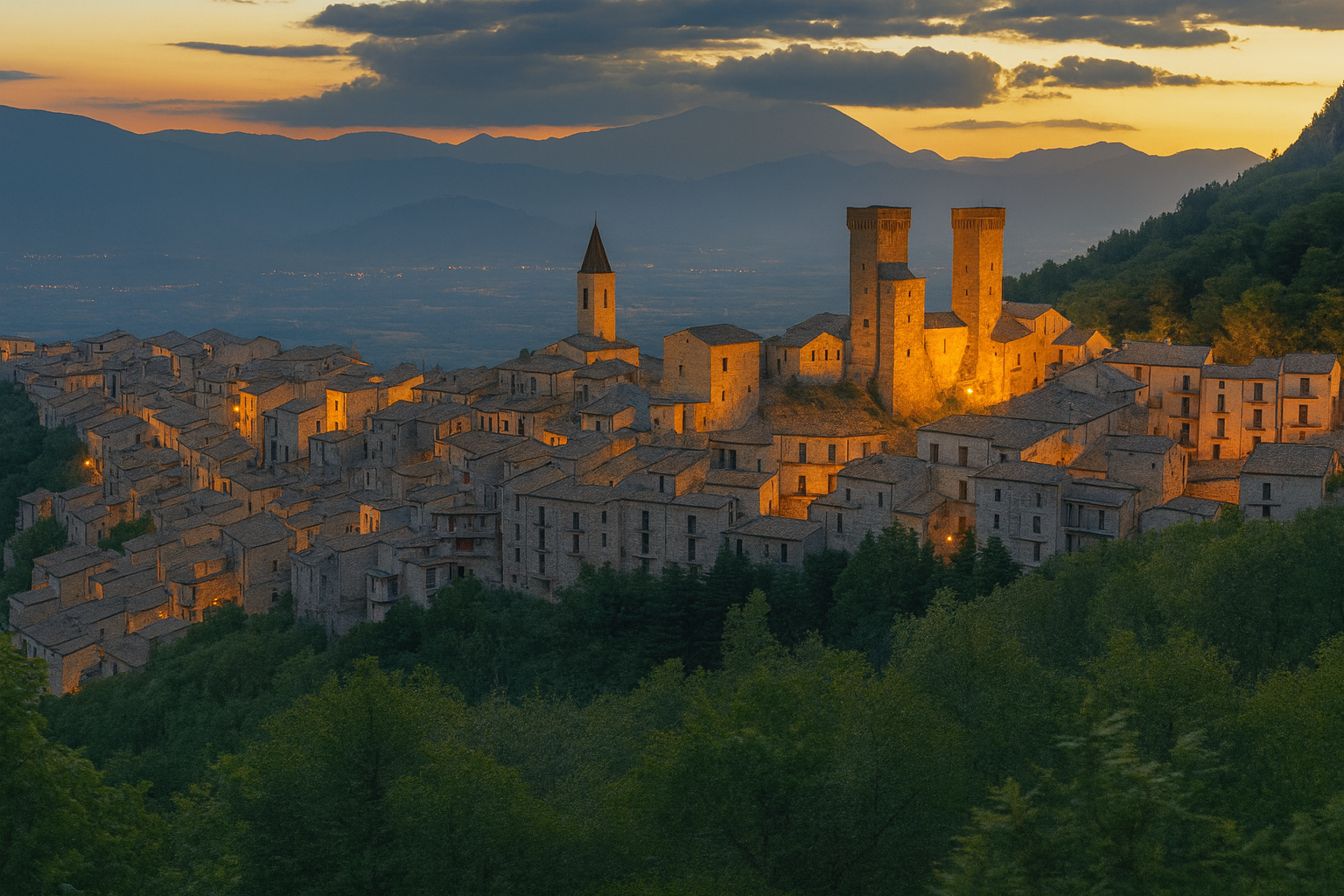
The provinces of Abruzzo. Panoramic view of a medieval village in Abruzzo, Italy, at sunset, with illuminated stone houses and the Apennine mountains in the background.

The provinces of Abruzzo form a mosaic of landscapes and cultures in the heart of Italy. Between the snow-capped peaks of the Apennines and the golden beaches of the Adriatic Sea, this region blends wild nature, medieval heritage, and generous gastronomy.

Divided into four provinces — L’Aquila, Teramo, Chieti, and Pescara — it represents an Italy that remains untouched, rich in tradition and authenticity.

The province of L’Aquila: spirituality and majestic mountains

As the regional capital, L’Aquila is the spiritual and historical heart of Abruzzo.

The famous Basilica of Santa Maria di Collemaggio, where Pope Celestine V was crowned, symbolizes a city proudly rebuilt after the 2009 earthquake.

The Gran Sasso e Monti della Laga National Park is home to the Corno Grande (2,912 m), the highest peak in the Apennines, and the Campo Imperatore, known as the Little Tibet.

The medieval villages of Castel del Monte, Santo Stefano di Sessanio, and Rocca Calascio bear witness to a living pastoral tradition, recognised as UNESCO Intangible Cultural Heritage thanks to transhumance.

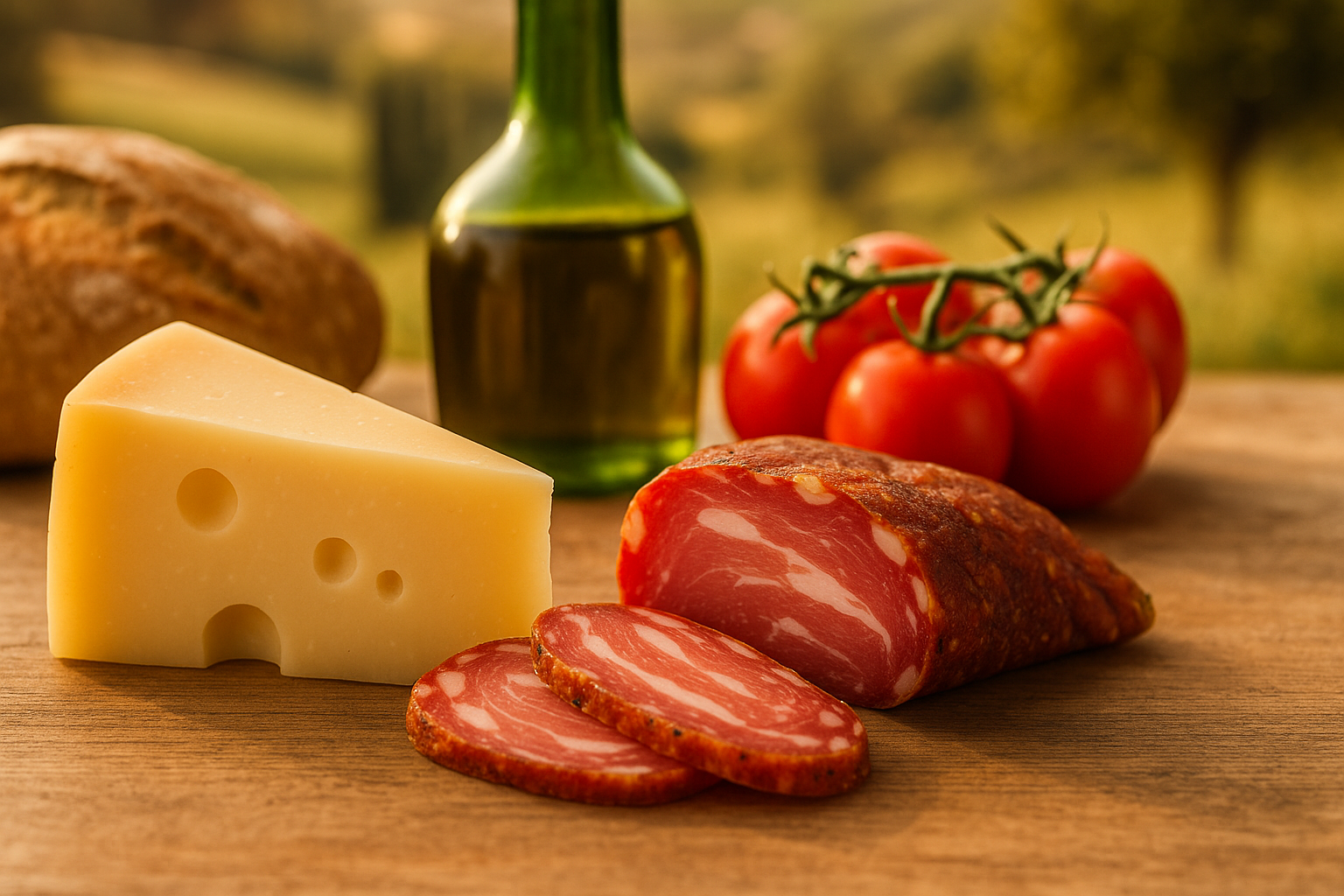
Typical flavours: Pecorino d’Abruzzo, grilled arrosticini, Montepulciano d’Abruzzo DOC.

The province of Teramo: hills, beaches, and artisanal traditions

In the north of Abruzzo, Teramo combines mountains and sea.

The Gran Sasso dominates the horizon, while the Adriatic coast stretches between Giulianova and Roseto degli Abruzzi, renowned for their family-friendly beaches.

The city of Teramo preserves Roman and medieval remains, and the surrounding villages continue to uphold rural traditions.

This is where spaghetti alla chitarra was born, an artisanal pasta cut by hand using a traditional wooden frame — a culinary symbol of Abruzzo.

Typical flavours: spaghetti alla chitarra, mountain cheeses, Trebbiano d’Abruzzo DOC.

In the south of Abruzzo, Chieti captivates with its rolling landscapes and medieval heritage.

The churches and monasteries, such as San Giovanni in Venere, reflect the religious and artistic significance of the area.

Along the coastline, the Trabocchi Coast reveals its ancient wooden fishing machines, now converted into stilt-mounted restaurants.

Inland, the vineyards of Chieti produce the region’s most famous wines: Montepulciano d’Abruzzo DOC and Trebbiano d’Abruzzo DOC.

Typical flavours: brodetto di pesce, extra virgin olive oil, Montepulciano and Trebbiano wines.

The smallest of the Abruzzo provinces, Pescara, is also the most contemporary.

Its capital, birthplace of the poet Gabriele D’Annunzio, is a dynamic urban centre oriented toward the sea.

Just a few kilometres away, the hills are home to peaceful villages and picturesque vineyards.

Pescara is also the gateway to the Majella National Park, the sacred mountain of Abruzzo, rich in hermitages and panoramic hiking trails.

In terms of gastronomy, one can enjoy Adriatic fish, fresh pasta, and parrozzo, traditional almond and chocolate cakes.

Typical flavours: parrozzo from Pescara, Adriatic fish, Trebbiano d’Abruzzo.

The provinces of Abruzzo: an Italian region with a thousand faces

From the snow-capped peaks of the Gran Sasso to the beaches of the Adriatic Sea, from the pastoral traditions of L’Aquila to the vineyards of Chieti, the provinces of Abruzzo offer a rare diversity.

It is a land of nature, history, and gastronomy, where each province reveals a different facet of an authentic, proud, and preserved Italy.

Leave a Reply

Your email address will not be published. Required fields are marked *