










The Gran Sasso and Monti della Laga National Park: a natural and cultural treasure

The Gran Sasso and Monti della Laga National Park is one of Italy’s most impressive natural treasures. Located in the heart of the Abruzzo region, between Lazio and Marche, this vast area of over 150,000 hectares is home to the highest peaks of the Apennines, exceptional biodiversity, and medieval villages of rare authenticity. It is here that the wild heart of the Italian mountains beats.
The Gran Sasso, the majestic roof of the Apennines
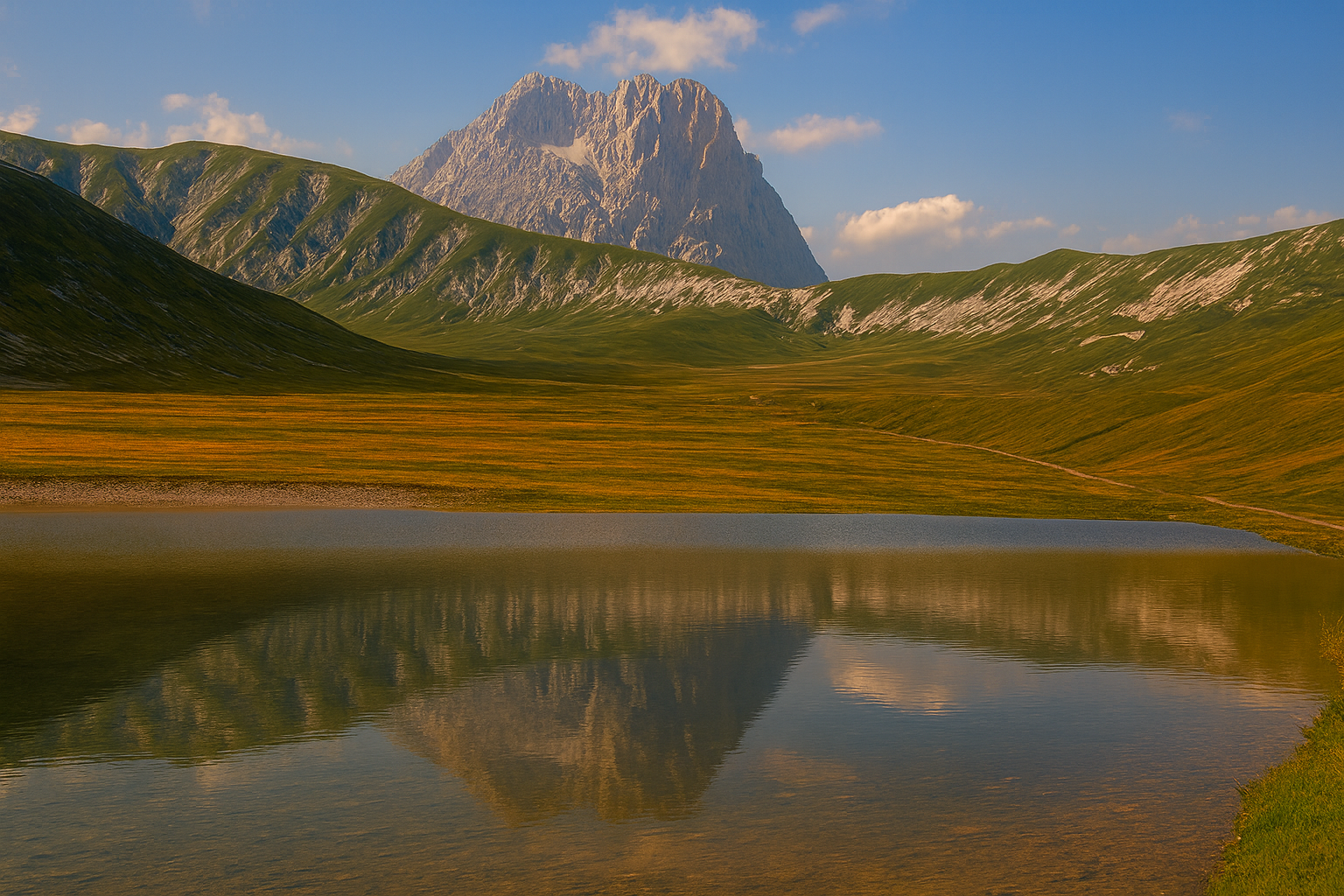
At the centre of the park stands the Gran Sasso d’Italia, a mythical mountain range whose highest peak, the Corno Grande, rises to 2,912 metres. It is the highest point in the entire Apennine range, offering breathtaking views over the surrounding valleys and, on clear days, the Adriatic Sea.
At its feet lies the Campo Imperatore, nicknamed the Little Tibet, stretching for kilometres. This plateau, with its almost lunar appearance, evokes both the steppes of Central Asia and the plains of the American Wild West. It is a popular destination for trekking, horseback riding, and even skiing in winter. In fact, the site is home to one of Italy’s oldest ski resorts, once frequented by Mussolini, who was briefly imprisoned there in 1943.
For nature lovers, the Campo Imperatore is a must-see spot in the Gran Sasso and Monti della Laga National Park, with its meadows where horses and sheep still graze freely.
An exceptional biodiversity in the Gran Sasso and Monti della Laga National Park
This national park is a true ecological sanctuary, protected since 1991. Its deep forests, wild gorges, and alpine meadows are home to wildlife of unique richness in Europe. Among the emblematic species are:
the Marsican brown bear, symbol of the Abruzzo region,
the Apennine wolf,
the Abruzzo chamois,
and the majestic golden eagle.
As for the flora, botany enthusiasts will be amazed by the presence of the Apennine edelweiss, a rare and protected species. This delicate balance between mountain and biodiversity makes the Gran Sasso and Monti della Laga National Park a model of environmental preservation in Italy.
The medieval villages of the Gran Sasso, between stone and silence
Exploring the Gran Sasso is not just about admiring its landscapes: it’s also a journey through time. The medieval villages of the Abruzzo region, perched on the hills and slopes of the massif, are among the most beautiful in Italy.
Among them:
Castel del Monte, listed among the Borghi più belli d’Italia, is famous for its light-stone architecture.
Santo Stefano di Sessanio, a carefully restored village that has become a symbol of sustainable tourism.
Calascio, overlooked by the fortress of Rocca Calascio, a filming location for cult movies such as Ladyhawke.
These villages preserve the soul of the Abruzzo region: cobbled streets, Romanesque churches, ancient fountains, and breathtaking views. Here, transhumance — still practiced today — connects the valleys to the high plateaus according to the seasons. This pastoral tradition is inscribed on UNESCO’s Intangible Cultural Heritage list, a testament to an ancestral way of life that remains alive.
The authentic flavours of the Gran Sasso and Monti della Laga
After a day of exploration, the local gastronomy perfectly completes the experience. The Gran Sasso and Monti della Laga National Park is also a land of flavours and craftsmanship.
The must-try specialties
Arrosticini: thin skewers of grilled mutton, a culinary emblem of the Abruzzo region.
Spaghetti alla chitarra: fresh pasta cut with a traditional tool, served with a rustic ragù.
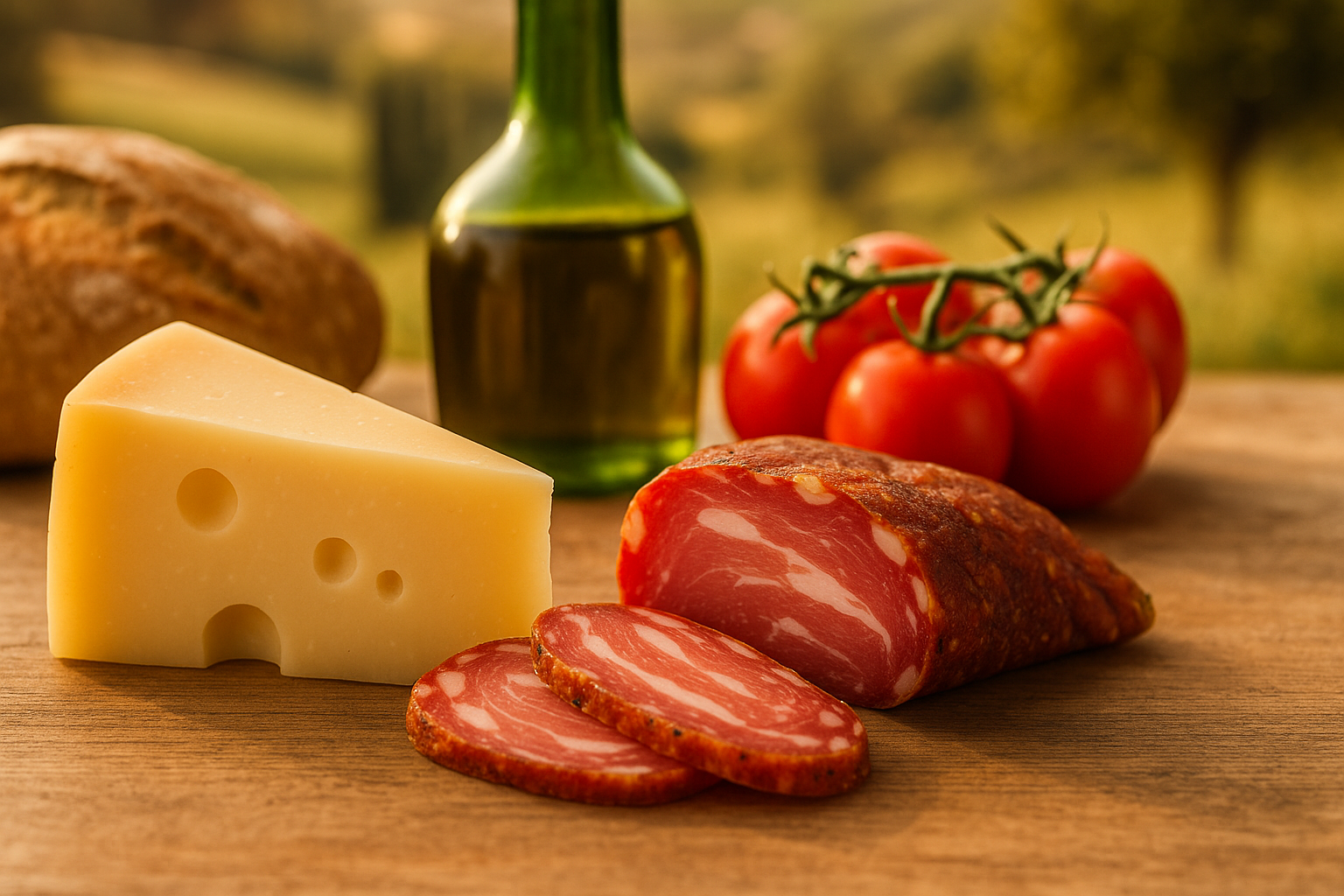
Pecorino d’Abruzzo: sheep’s cheese aged in the mountains, often served with mountain honey.
And of course, the Montepulciano d’Abruzzo DOC and Trebbiano white wines, perfect companions for these generous dishes.
To extend your gastronomic journey, take a look at our guide to the gastronomy of the Abruzzo region.
For recipes and local traditions, the website of the Parco Nazionale del Gran Sasso e Monti della Laga offers a wealth of valuable information about typical products and culinary festivals.
Activities and practical tips for visiting the Gran Sasso
Location
From Rome, access is easy via the A24 motorway, taking about 2 hours by car. Regional buses serve several villages in the park, including Castel del Monte and Santo Stefano di Sessanio.
Best periods
Spring and summer are perfect for hiking and enjoying the blooming landscapes.
Autumn reveals vibrant colours in the forests.
In winter, the Campo Imperatore plateau transforms into a ski area.
Recommended activities
Hiking and trekking (marked trails, mountain refuges).
Climbing and mountaineering on the walls of the Corno Grande.
Mountain biking, horseback riding, and cultural visits to the historic villages.
Wildlife observation, ideal for nature photography enthusiasts.
Also check out our article on the most beautiful natural parks in Italy to plan your itinerary.
Why discover the Gran Sasso and Monti della Laga National Park?
To climb the highest peak of the Apennines, the Corno Grande.
To admire the panoramas of the Campo Imperatore, a unique plateau in Europe.
To encounter exceptional wildlife and flora.
To experience the still vibrant pastoral traditions.
To savour authentic and hearty mountain cuisine.
The Gran Sasso and Monti della Laga National Park embodies the wild and cultural soul of the Abruzzo region. It is a place where nature, history, and gastronomy unite to offer travellers an unforgettable experience.
