Transhumance in Abruzzo: pastoral traditions inscribed on the UNESCO list
Transhumance in Abruzzo embodies a cultural and human heritage deeply rooted in the Italian mountains. Practised for thousands of years, this seasonal migration of herds between the summer pastures of the Gran Sasso and the winter plains of Puglia symbolizes the harmonious relationship between humans, nature, and animals.
Recognised in 2019 by UNESCO as an Intangible Cultural Heritage of Humanity, this pastoral ritual continues today to enliven villages, festivals, and local traditions throughout Abruzzo.
Transhumance in Abruzzo, an ancestral rhythm in the heart of the mountains
Since Roman times, shepherds have travelled hundreds of kilometres along the tratturi, the ancient grassy paths that connected the mountains of Abruzzo with the fertile plains of southern Italy.
The most famous of them, the Tratturo Magno, stretches for over 240 km between L’Aquila and Foggia. These wide, green paths still bear witness to the economic and cultural importance that transhumance once held in Abruzzo.
Every autumn, the herds descended towards the plains of the Tavoliere delle Puglie, and in spring, they returned to the alpine pastures of the Gran Sasso. These long and demanding journeys set the rhythm of rural life, marked by celebrations, trade exchanges, and the transmission of ancestral knowledge.
Today, hikers and riders can still follow the tratturi to relive this historic journey. The routes are dotted with spectacular natural landscapes, small sanctuaries, and authentic villages.
To learn more about the surrounding parks, check out our article on the Gran Sasso and Monti della Laga National Park.
The emblematic villages of pastoral culture in Abruzzo
Exploring transhumance in Abruzzo also means discovering the villages where this tradition has shaped life and the landscape.
Anversa degli Abruzzi
Perché in de Sagittario-vallei, viert dit pittoreske dorp elk jaar het Festa della Transumanza. De kuddes trekken door de geplaveide straatjes in een feestelijke sfeer, begeleid door volksliederen en het geluid van klingelende bellen.
Scanno
Known for its heart-shaped lake, Scanno is an emblematic village where sheep farming and pastoral traditions are still very much alive. The local architecture, traditional costumes, and rustic recipes reflect the enduring importance of pastoral life.
Castel del Monte
Located in the Gran Sasso National Park, Castel del Monte is nicknamed the “capital of shepherds.” This medieval village, listed among the most beautiful in Italy, hosts cultural events dedicated to pastoral life and transhumance in Abruzzo.
Villetta Barrea
In the National Park of Abruzzo, Lazio and Molise, the Museum of Transhumance displays objects, photographs, and stories of shepherds. It is a must-visit place to understand the human and spiritual dimension of this ancient tradition.
Santo Stefano di Sessanio
Once a crossroads for the wool trade, this restored village recalls the central economic role of transhumance in the history of Abruzzo. Its stone-paved streets and traditional houses transport visitors back to another era.
Shepherds’ gastronomy: the flavours of transhumance in Abruzzo
Transhumance in Abruzzo is not just about moving herds: it has profoundly shaped mountain gastronomy. Sheep and goat farming, the heart of this tradition, have inspired simple and authentic recipes that embody Abruzzese cuisine.
Specialties born from pastoral life
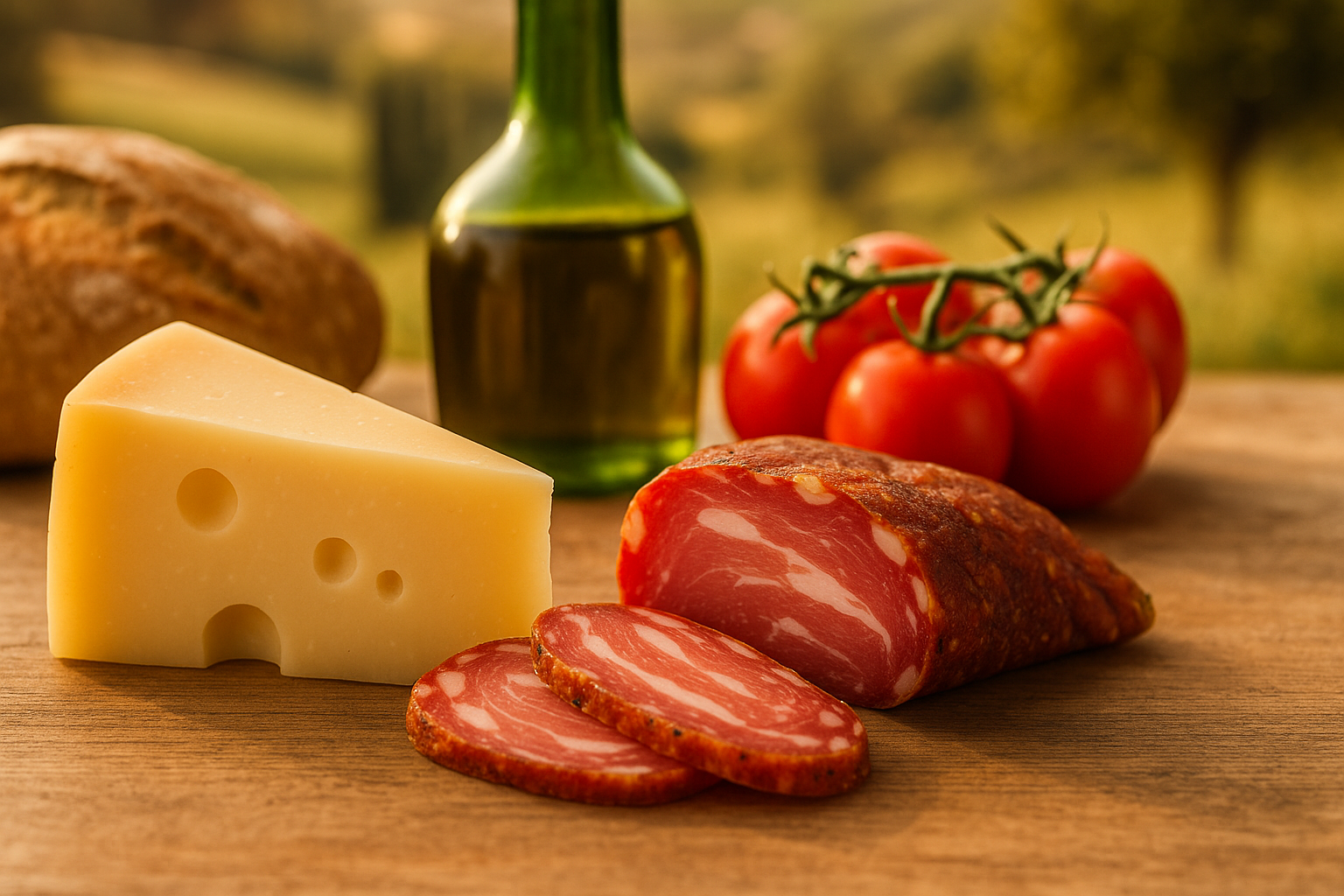
Pecorino d’Abruzzo: sheep’s cheese with a bold flavour, often aged in mountain caves.
Arrosticini: small grilled lamb skewers, a symbol of conviviality and sharing.
Pasture honey: harvested in the mountains, often scented with thyme or wildflowers.
Spaghetti alla chitarra: rustic pasta cut with the traditional “guitar” tool, served with a mutton ragù.
These rustic dishes tell the story of a people close to the land, where each ingredient reflects the climate, the seasons, and the gestures passed down from generation to generation.